

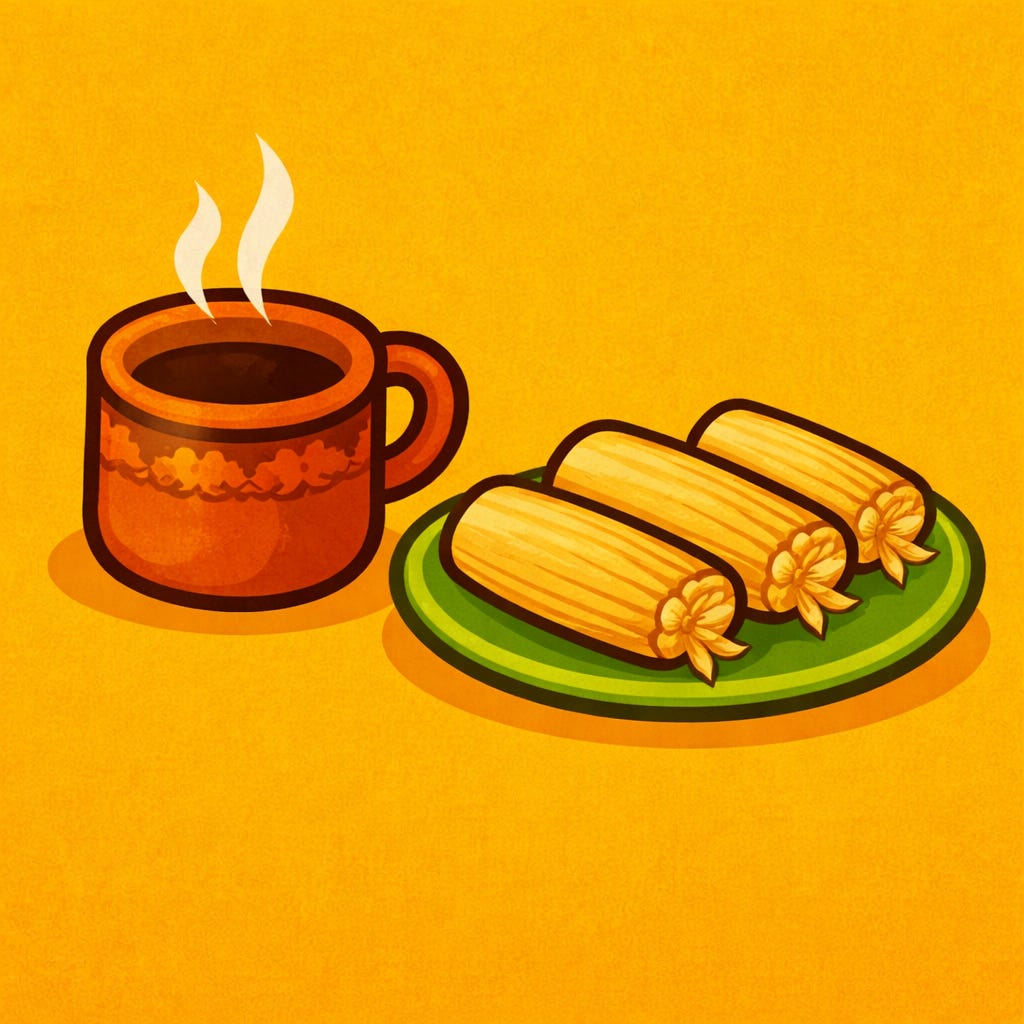
Mexico City has no shortage of beautiful breakfasts. But many visitors never quite see the one the city actually eats.
Foreign visitors often begin their mornings at places like Café Rosetta or Café Toscano, or inside the polished dining rooms of boutique hotels all of which are removed from how most people in Mexico actually begin their day.
Real Mexico City breakfasts tend to happen standing up on a sidewalk with the noise of traffic all around. Most of them are quick, inexpensive, and deeply rooted in everyday Mexican food culture. They are the breakfasts of office workers, taxi drivers, students rushing to class, and vendors opening their stalls before sunrise.
So Mexico Decoded put together a small guide to five of the most Mexican street breakfasts you can find in Mexico City.
All of them are within walking distance of the tourist zones of Roma, Condesa, and Reforma. Yet each one offers something visitors rarely.
1. Tamales & Atole
The first stop belongs to one of Mexico’s oldest breakfast traditions: tamales with atole. Tamales are small packets of corn dough steamed inside corn husks or plantain leaves, usually filled with meat, sauce, cheese, or vegetables. Think of them less as a pastry and more as a dense, savory corn dumpling. They are warm, filling, and designed for mornings when people need something substantial before a long commute.
They are usually paired with atole, a thick hot drink also made from corn dough and flavored with chocolate, vanilla, rice, or fruit. It has the texture of a thin porridge and the comforting warmth of hot chocolate.
Bonus: For the full Mexico City experience, locals sometimes ask for their tamal inside a bolillo bread roll, creating what might be the world’s most unapologetically heavy breakfast sandwich: the legendary *guajolota*.
Where to find it
A stand on Av. Álvaro Obregón, near Valladolid, sells tamales and atole Monday through Saturday, from about 7:30–8:00 AM until noon. Atole is usually available in chocolate and another flavor that changes daily, such as guava, oatmeal, cajeta, or strawberry. Tamales include green, red, rajas, sweet, and mole varieties. The vendor also sells *café de olla*, a traditional Mexican coffee flavored with cinnamon and piloncillo.
Price range
Tamales $25–30 MXP
Atole $20–25 MXP


2. Chilaquiles
Another morning staple is chilaquiles. If tamales are portable comfort food, chilaquiles are Mexico’s answer to the hangover breakfast. Tortilla chips are simmered briefly in either red or green salsa until they soften while retaining some crunch. They are then topped with cream, cheese, onions, and often chicken or a fried egg. The result is bright, tangy, and pleasantly spicy.
Where to find it
Near Reforma Avenue and Varsovia Street, close to the Ángel de la Independencia, a street stand serves chilaquiles with red or green sauce and the protein of your choice, including sirloin or breaded chicken breast. The stand also sells tortas, pan dulce, and flavored coffees. They operate two stands: one on the corner of Avenida Reforma and another, where food is cooked directly on the grill, in front of the Varsovia Theater.
Price range
Chilaquiles $50 MXP
Pan dulce $25–30 MXP
Sandwiches, bagels, tortas, and chapatas $60–80 MXP
Coffee $25–35 MXP


3. Pan Dulce & Coffee
Then there is perhaps the most common breakfast of all: pan dulce and coffee. It is the meal of people running late for work. A quick stop at a bakery cart, a sweet bread wrapped in paper, and a cup of coffee to wake you up.
Pan dulce simply means “sweet bread,” but the variety is vast. The most recognizable is the concha, a soft bun topped with a sugar crust patterned like a seashell. Others include jam-filled pastries called besos
, donuts, churros, and buttery biscuits. Compared with French pastry, pan dulce tends to be softer and more bread-like, with a fluffy interior and a lightly sweet flavor.
Warning: Visitors expecting carefully brewed espresso should probably stay away from morning street stands. Most vendors prepare coffee using instant powder dissolved in hot water, then add sugar and evaporated milk. The result is sweeter and lighter than the coffee most Americans are used to.
Where to find it
There’s a stand on Genova, between Liverpool and Londres, selling sandwiches, pan dulce, coffee, fruit salads, gelatin cups, and ready-to-go cereal bowls. It sits right outside the Kentucky Fried Chicken and operates Monday through Sunday from 5 AM to around 11 AM.
Price range
Coffee $15–17 MXP
Pan dulce $15 MXP
Fruit $25–30 MXP


4. Sandwiches & Tortas
Another breakfast that visitors recognize immediately—but often misunderstand slightly—is the world of sandwiches and tortas. These are common at food stands across Mexico City because they offer a quick and complete meal: some protein, some carbohydrates, and at least a token amount of vegetables.
Most vendors prepare them using bolillo, a crusty roll that turns the sandwich into a torta. Others use sliced bread, baguettes, or croissants. Fillings are usually simple: cheese, ham, or chicken breast.
At first glance they look familiar, but Mexican tortas are not quite the same as American sandwiches. The bread is sturdier and built to absorb sauces and fillings. Flavors often include avocado, pickled jalapeños, and tangy condiments.
Warning: Mexican street sandwiches usually contain less filling than visitors expect. They are often mostly bread and are commonly made with sliced sandwich bread.
Where to find it
At the intersection of Genova and Liverpool, near the Insurgentes metro station, a stand sells sandwiches alongside fruit cups with yogurt or cream, salads, and pastries. It is open Monday through Saturday from 6 AM until around 10:30 or 11 AM.
Price range
Sandwiches $50–55 MXP
Fruit $60–65 MXP
Salad $85 MXP


5. Juices & Fresh Fruit
Fresh juices function as both breakfast and morning reset. Mexico City’s juice culture is remarkable. Street vendors blend combinations that feel closer to nutritional formulas than beverages: orange with pineapple and ginger, apple with celery and spinach, or strawberry with beet.
Where to find it
A vendor in Condesa on Colima Street, near the intersection with Avenida Oaxaca and Valladolid—right in front of a Banorte bank—serves a wide range of juices and milkshakes made fresh to order. Don Benjamín is open from 6 AM to 4 PM Monday through Friday, and Saturdays from 6 AM to noon. Another location operates at San Luis Potosí and Medellín in Roma Norte from 7 AM to 5 PM on weekdays and until 2 PM on Saturdays.
Price range
Juices $30–50 MXP


Mexico City is a place where extraordinary restaurants exist at every level of formality. But some of the city’s most authentic culinary experiences happen on sidewalks.
If you are visiting the city, by all means enjoy the cafés. But one morning, skip the reservation. Walk a few blocks. Follow the smell of coffee, corn, or fresh bread.
That is how Mexico City actually wakes up.
I am a huge fan of your work and a paid subscriber. I live in Mexico City and read and speak Spanish fluently, but I've found that no one provides more insightful commentary on Mexican political life than you (in Spanish or in English). However, this post is garbage and it reads like something generated by ChatGPT. It is a perfect example of the "enshitification" process. If you post more click bait like this, I will unsubscribe from your Substack.